
IQM unveils Halocene upgrade program at SC26, creating a path to over 1,000 qubits while accelerating integration with AI-based applications
IQM Halocene, the company’s error-correction product line, now offers an upgrade path to over 1,000 qubits on the way to fault-tolerant quantum computing
- Built on IQM’s experience integrating and upgrading more quantum computers in HPC centers than any other company
- IQM’s HPC integration service, included with each upgrade, connects every new Halocene system to a center’s existing infrastructure, schedulers and GPU platforms, so it is productive from day one
- Upgrades without downtime, more value from each upgrade and continuity of software, workflows and skills from one system to the next
- New customers can start now and grow with Halocene, while existing customers can move to each new system seamlessly
This press release features multimedia. View the full release here: https://www.businesswire.com/news/home/20261117303243/en/
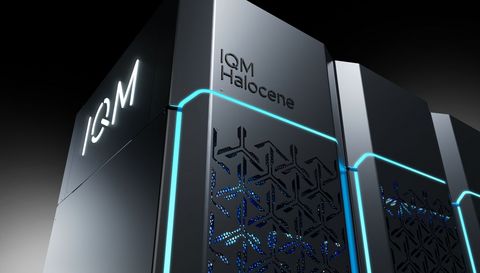
IQM Halocene, the company’s error-correction product line, now offers an upgrade path to over 1,000 qubits on the way to fault-tolerant quantum computing.
IQM introduced Halocene in
Accelerating integration with AI-based applications
The most valuable near-term uses of quantum computing will be hybrid, with quantum processors working alongside the CPUs and GPUs that power AI and simulation. Because Halocene connects directly to a center’s existing infrastructure, schedulers and GPU platforms, it accelerates integration with AI-based applications, so researchers and companies can run hybrid workloads today while building toward error-corrected computing.
More value from every upgrade, without downtime
When a customer upgrades, IQM installs the new Halocene system while the current one keeps running, and removes the previous system once the new one is in service. IQM’s HPC integration service connects the new system to the center’s existing infrastructure, schedulers and GPU platforms. Because Halocene systems share common infrastructure, error-correction methods and software across generations, the investment in each system carries forward to the next, giving customers a more cost-effective path to each upgrade.
Lowering the risk of starting early
A common concern for organizations adopting quantum computing is that a system bought today will be outpaced within a few years. IQM’s customer history shows a different pattern. VTT has moved through successive IQM systems since 2021, from 5 qubits to a 53-qubit system coupled with the LUMI supercomputer.
The Leibniz Supercomputing Centre (LRZ) has integrated four IQM systems into its supercomputing infrastructure. In each case, software, workflows and skills were carried forward from one system to the next.
“Integrating quantum computers into our supercomputing environment has shown us that the real value lies in continuity. Each IQM system we have added has built on the integration, software and expertise we developed with the previous one, so our users keep working while the technology moves forward. An upgrade path designed around that continuity is what supercomputing centers need on the way to fault-tolerant quantum computing,” said Dr.
Halocene extends that pattern. Organizations can start with a 150-qubit system, build their teams and intellectual property, and move toward fault-tolerant quantum computing on the same platform. Systems are installed on site, which keeps them under the customer’s control for security and data residency.
Experience no one else has
IQM has sold more on-premises quantum computers than any other manufacturer and has completed 10 integrations with supercomputing systems since 2021, more than any other company. Halocene is built on an open and modular error-correction stack, so customers can experiment, develop their own methods and avoid lock-in. IQM’s integration work also draws on its collaboration with NVIDIA, including on NVQLink for scalable quantum error correction.
“Solving the physics is only half the challenge. The other half is making quantum computing work commercially, inside the infrastructure organizations already run,” said Dr.
IQM is presenting Halocene and the upgrade program at SC26 in
About IQM Quantum Computers
IQM Quantum Computers (Nasdaq: IQMX) is a global leader in integrated quantum computing, delivering full-stack superconducting quantum computers to enterprises, research institutions, universities, high-performance computing centers and national laboratories worldwide. With more on-premises systems sold than any other manufacturer, IQM gives customers direct ownership and control of quantum computers that integrate with their supercomputing and AI infrastructure, with cloud access also available through IQM Resonance. From processors made in its own fabrication facility to an open software stack, IQM is advancing toward fault-tolerant quantum computing. Founded in 2018 and headquartered in Espoo, Finland, with major operations in Munich, Germany, IQM employs more than 450 people across Europe, Asia and North America. IQM is the first publicly listed European quantum company on the Nasdaq Stock Market.
Certain statements herein that are not historical facts are forward-looking statements. These forward-looking statements may be identified by the use of terms and phrases such as “believe,” “expect,” “intend,” “outlook,” “may,” “will,” and other similar terms and phrases. Such forward-looking statements include, but are not limited to, statements regarding IQM’s strategies, future or anticipated market or competitive position, business plans and future performance, including IQM’s cash runway and outlook for full year 2026. Forward-looking statements involve known and unknown risks, uncertainties and other factors that could cause actual results to differ materially from the results anticipated by these forward-looking statements, including, but not limited to: A) expectations, plans, benefits or outlook related to our strategies, projects, programs, product launches, growth management, licenses, intellectual property, sustainability and other ESG targets, operational key performance indicators and decisions on market exits or expansions; B) expectations, plans or benefits related to future performance of our businesses (including the expected impact, timing and duration of potential global pandemics, geopolitical conflicts and the general or regional macroeconomic conditions on our businesses, our supply chain, the timing of market changes or turning points in demand and our customers’ businesses); C) expectations and targets regarding financial performance and results of operations, including market share, prices, net sales, order backlog, order intake, income, margins, cash flows, cost savings, the timing of receivables, operating expenses, provisions, impairments, tariffs, taxes, currency exchange rates, hedging, investment funds, inflation, product cost reductions, competitiveness, value creation, and revenue generation in any specific region; D) our ability to execute, expectations, plans or benefits related to transactions, investments and changes in organizational structure and operating model, including the expansion of our manufacturing and production capacity; E) expectations related to the commercialization and market acceptance of quantum technology and the timing and progress of product development; and F) other risks and uncertainties described in IQM’s public filings and regulatory releases from time to time. These statements are based on management’s best assumptions and beliefs in light of the information currently available to them. IQM anticipates that subsequent events and developments may cause its views to change. IQM specifically disclaims any obligation to update the forward-looking statements in this press release except as required by law. These forward-looking statements should not be relied upon as representing IQM’s views as of any date subsequent to the date hereof.
View source version on businesswire.com: https://www.businesswire.com/news/home/20261117303243/en/
Media contact
press@iqm.tech
Source: IQM Quantum Computers